


5 Factors Affecting Logistics Costs


1. Transportation Structure
The key difference between major manufacturing economies does not primarily lie in cheaper labor or more advanced technology but in how freight transportation is organized.
In China, the estimated modal structure is:
Inland waterways: 30-35%
Rail: 20-25%
Road: 40-45%
In contrast, Vietnam’s structure is heavily road-dependent:
Road: 75-80%
Inland waterways: 15-18%
Rail: 1-2%
In terms of cost per ton-kilometer:
Trucking: 100% (baseline)
Rail: 30-40%
River transport: 10-20%
This structure partly explains why China’s logistics costs account for about 14% of GDP, while in Vietnam the figure ranges between 16-20%.
2. Inland Waterway Systems
China has effectively leveraged the Yangtze River system, a waterway stretching over 6,300 kilometers and directly connected to the Port of Shanghai. Large cargo vessels can travel deep into the country’s interior, enabling factories located thousands of kilometers from the coast to maintain relatively low logistics costs.
Vietnam also has significant potential. The Red River system and the northern delta region could play a similar role in the country’s long-term logistics strategy.
3. Industrial Planning Based on Cargo Flow
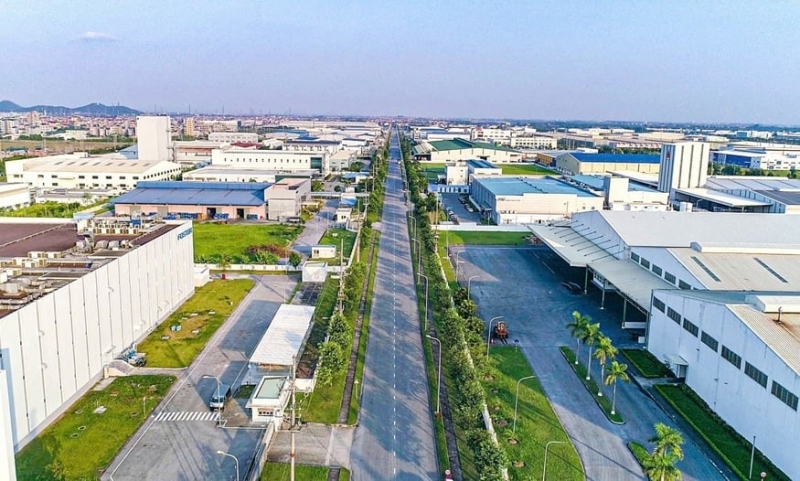
Industrial parks located near airports, rivers, railways or inland ports can significantly optimize transit time and logistics costs.
However, in reality many industrial zones still rely primarily on trucking, which can increase transportation costs by 30-200% depending on the industry and scale of operations.
4. A Tiered Port System
China operates a multi-tiered port system, including:
International hub ports such as the Port of Shanghai, Ningbo Port, and Shenzhen Port
Inland river ports
Inland Container Depots (ICDs) located deep within the mainland
With this system, containers can travel thousands of kilometers by barge or rail before reaching seaports. This structure distributes transportation costs more efficiently across distances and creates economies of scale for the entire manufacturing supply chain.
5. The Role of Freight Rail
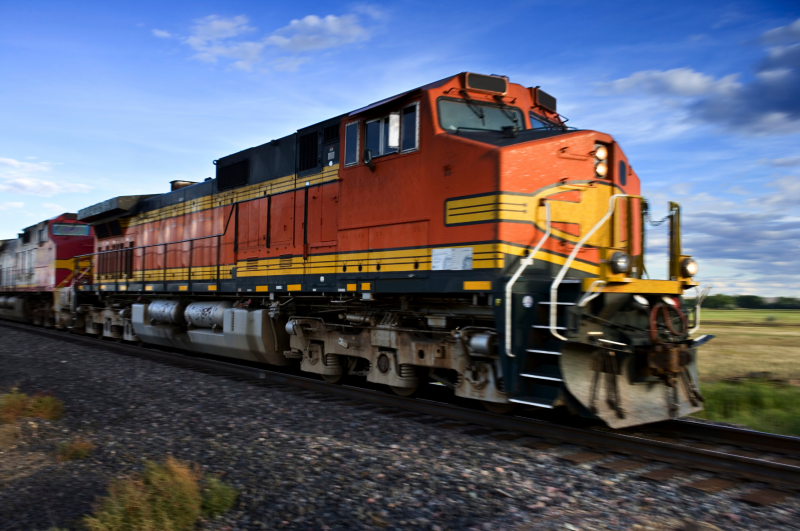
With more than 150,000 kilometers of railway, freight trains in China can transport 3,000-10,000 tons per trip, equivalent to 100-300 trucks. This large scale creates strong economies of scale, significantly reducing logistics costs.
Implications for Vietnamese Businesses
Planning and upgrading a multimodal transportation network is a long-term national effort. However, for manufacturing companies, logistics costs can already be optimized from the very first step - choosing the right investment location.
Industrial parks with direct connectivity to national highways, expressways, airports, railways, major river systems or seaports can significantly reduce transportation costs and create sustainable competitive advantages within supply chains regardless of fluctuations in fuel prices or road transport costs.
In the long term, as multimodal transportation networks continue to develop, projects located in strategic logistics positions will be better positioned to maintain lower logistics costs and stronger operational efficiency.
Related articles


Do you need support?
Our team of experts is always ready to support and provide customers with optimal solutions! Contact us